

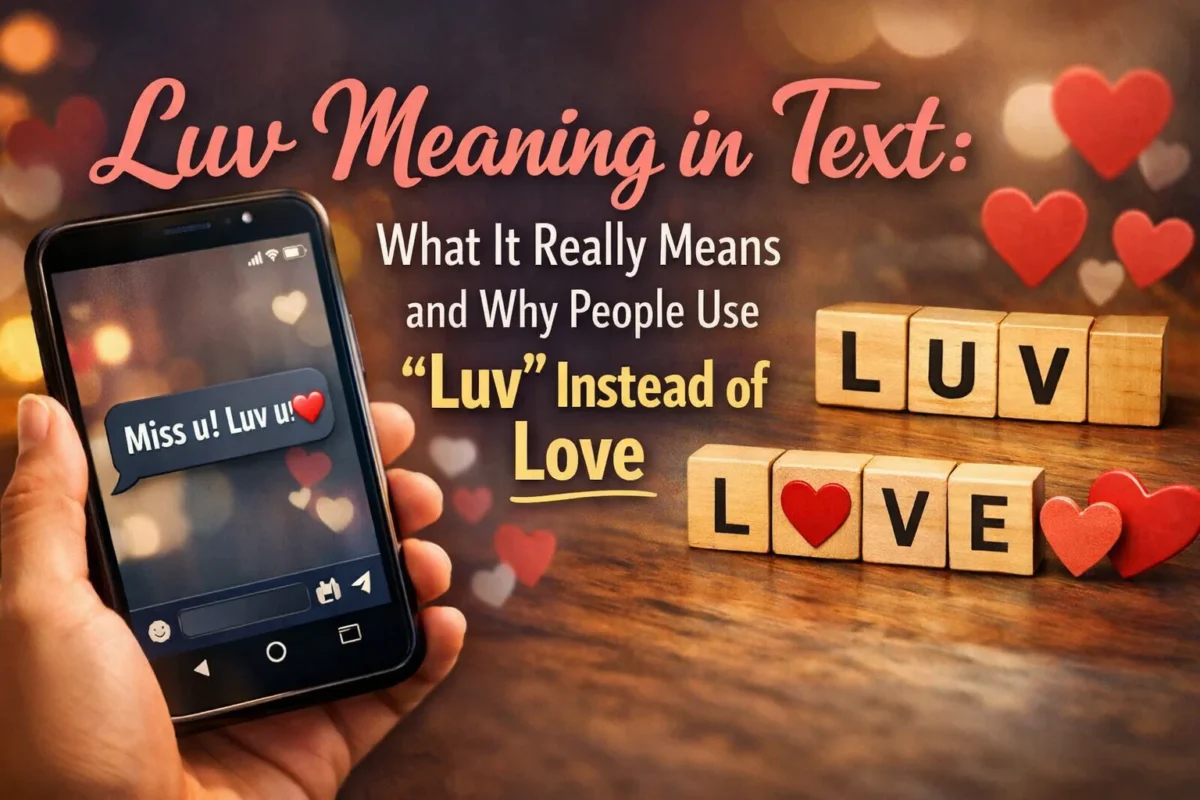
You’ve seen it. Maybe in a late-night message. Maybe in a casual “luv ya” before someone disappears offline. It looks simple. Just three letters. Yet it carries layers of meaning that aren’t always obvious.
So what does “luv” really mean in text?
Here’s the short version: it usually signals light affection without full emotional weight. But that’s just the surface. Context, tone, timing, and relationship dynamics can flip its meaning completely.
Let’s unpack everything—clearly, honestly, and without fluff.
Quick Answer: What Does “Luv” Mean in Texting?
At its core, “luv” is a casual, softened version of “love.”
It conveys:
- Warmth
- Affection
- Familiarity
But it avoids:
- Deep emotional commitment
- Serious romantic weight
Simple Breakdown
| Term | Meaning Level | Emotional Weight |
| Luv | Light affection | Low to medium |
| Love | Deep emotional bond | High |
Example:
- “Love you” → strong, intentional
- “Luv u” → softer, more relaxed
👉 Think of “luv” as the difference between a handshake and a hug. Both are warm. One goes deeper.
Where Did “Luv” Come From? (Origins and Evolution)
“Luv” didn’t just appear out of nowhere. It evolved alongside how we communicate.
1. Phonetic Spelling Roots
English has always played with sound-based spelling. Words like:
- “nite” instead of “night”
- “tho” instead of “though”
“Luv” follows the same pattern. It reflects how the word sounds, not how it’s traditionally written.
2. The SMS Era Changed Everything
Back in early mobile texting:
- Messages had strict character limits (160 characters)
- Typing was slow (T9 keyboards)
People shortened words to save time and space.
“Luv” became a faster, easier version of “love.”
3. Internet Culture Normalized It
Chatrooms, MSN Messenger, early social media—these spaces encouraged:
- Informality
- Creativity
- Speed
“Luv” fit perfectly.
4. Gen Z and Digital Identity
Younger users didn’t just adopt “luv”—they embraced it as part of their style.
Now it shows up in:
- Bios
- Usernames
- Aesthetic captions
It’s not just a word anymore. It’s part of digital personality.
Why People Use “Luv” Instead of “Love”
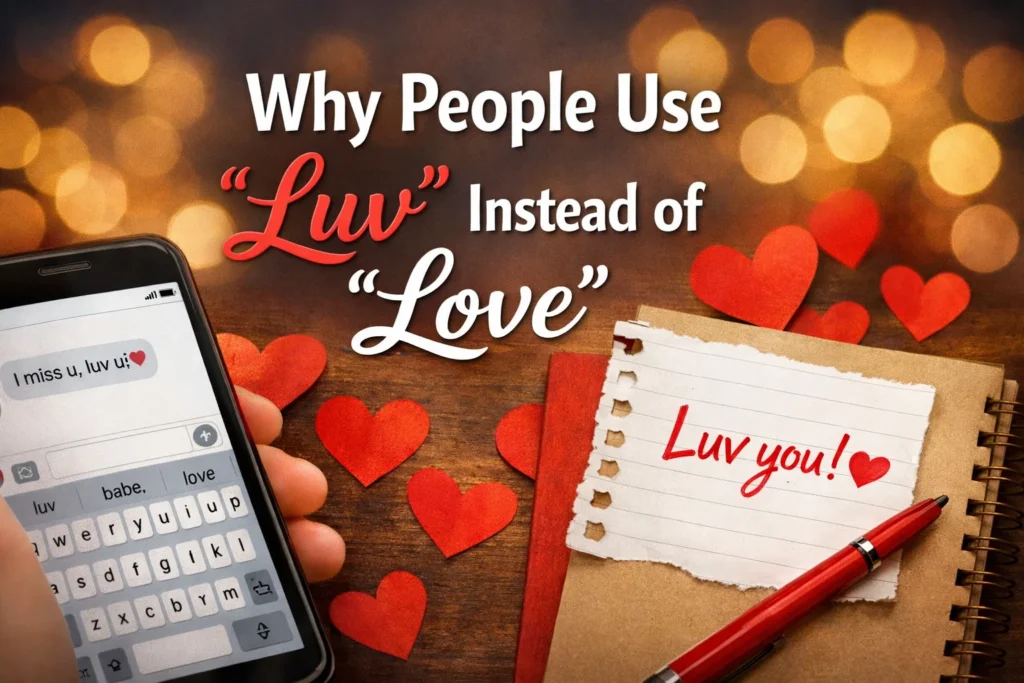
This is where things get interesting. People don’t choose “luv” randomly. There’s always a reason—even if it’s subconscious.
It Feels Less Serious
“Love” can feel heavy. It carries expectations.
“Luv” softens that weight.
Example:
- Early dating stage → “luv ya” feels safe
- Serious relationship → “love you” feels natural
It Sounds Playful and Casual
“Luv” has a relaxed tone.
It fits:
- Jokes
- Friendly chats
- Light flirting
It doesn’t demand emotional depth.
It Saves Time While Typing
Yes, this still matters.
Even with modern keyboards, habits stick. People type fast. They simplify words.
“Luv” is quicker. Cleaner. Familiar.
It Creates Emotional Distance
Here’s a subtle truth.
Sometimes, people use “luv” to avoid vulnerability.
They might feel something deeper—but they’re not ready to say it outright.
So they choose a softer version.
It Reflects Personal Style
Some people just like how it looks.
You’ll often see:
- “luv” in usernames
- “luv” in aesthetic posts
- “luv” in casual tone branding
It’s expressive. Slightly unconventional. A bit playful.
“Luv” vs “Love”: What’s the Real Difference?
Let’s break it down clearly.
| Aspect | “Luv” | “Love” |
| Tone | Casual, soft | Deep, intentional |
| Emotion | Light affection | Strong emotional connection |
| Usage | Friends, flirty texts | Romantic or serious contexts |
| Commitment | Low emotional risk | High emotional investment |
| Frequency | Everyday chats | Meaningful moments |
Key Insight
“Luv” says: I care about you.
“Love” says: I feel deeply about you.
What Does “Luv” Mean From a Guy vs a Girl?
Context matters more than gender. Still, patterns exist.
When a Guy Says “Luv”
It can mean:
- He likes you but isn’t ready to commit
- He wants to stay emotionally safe
- He’s keeping things light and playful
Example:
“Goodnight luv 😊”
That could be:
- Flirty
- Friendly
- Or slightly guarded
👉 Watch consistency, not just words.
When a Girl Says “Luv”
It often signals:
- Warmth and friendliness
- Casual affection
- Sometimes playful flirting
Example:
“Miss you luv 💕”
This can feel sweet. But it doesn’t always mean romance.
Is “Luv” Romantic or Just Friendly?
Here’s the honest answer:
It can be both.
It depends on three things:
Context
- Ongoing conversations
- Relationship history
- Emotional tone
Emojis and Add-ons
Compare:
- “luv u ❤️” → romantic
- “luv ya lol” → friendly
Frequency
One message means little.
Patterns tell the truth.
Common Situations Where People Use “Luv”
You’ll see “luv” show up in predictable places.
Everyday Texting
- “Thanks luv”
- “See you later luv”
Casual Flirting
- “Goodnight luv 😉”
- “You’re cute luv”
Friendly Conversations
- “Miss you luv 💕”
- “Take care luv”
Social Media
- Comments: “so pretty luv”
- Captions: “self luv vibes”
Conversation Closings
- “Bye luv”
- “Talk later luv”
Read More: CTFU Meaning in Text: What It Really Means and When to Use It (2026 Guide)
When You Should (and Shouldn’t) Use “Luv”
Using “luv” the wrong way can send mixed signals.
When It Works Well
- Informal chats
- Friendly conversations
- Light flirting
- Playful messages
When to Avoid It
- Serious discussions
- Emotional confessions
- Professional messages
Bad example:
“I really luv you deeply and want a future with you”
It sounds inconsistent. The tone doesn’t match the message.
Psychological Meaning Behind Using “Luv”
This is where things get deeper.
Low-Risk Emotional Expression
People want connection. But they also fear rejection.
“Luv” offers a middle ground:
- Expresses care
- Avoids full vulnerability
Emotional Buffering
It acts like a cushion.
Instead of saying something intense, people soften it.
Modern Communication Shortcuts
Digital conversations move fast.
People compress emotions into:
- Short words
- Emojis
- Abbreviations
“Luv” fits perfectly into this system.
Examples of “Luv” in Real Text Conversations
Let’s decode real scenarios.
Friendly Tone
“Miss you, luv 💕”
Meaning:
- Warm
- Affectionate
- Not necessarily romantic
Flirty Tone
“Goodnight luv 😉”
Meaning:
- Playful
- Suggestive
- Slight romantic interest
Casual Tone
“Thanks luv”
Meaning:
- Polite
- Friendly
- No deeper emotion
Mixed Signals
“luv ya”
Meaning:
- Could be genuine
- Could be habitual
- Depends on context
How to Respond When Someone Says “Luv”
Don’t overthink it. But don’t ignore context either.
Match Their Tone
If they say:
“Goodnight luv”
You can reply:
“Goodnight 😊”
Keep it balanced.
If You’re Interested
Slightly increase warmth:
“Sleep well ❤️”
If You’re Unsure
Stay neutral:
“Talk soon”
If You Notice a Pattern
Look at:
- Frequency
- Consistency
- Effort
Words matter less than behavior.
Does “Luv” Mean the Same Across Cultures?
Not always.
United Kingdom
“Luv” can be very casual.
Used even with strangers:
- “Alright luv?”
It’s friendly, not romantic.
United States
More context-dependent.
Usually:
- Friendly
- Slightly affectionate
Online Global Culture
Meaning blends across regions.
Tone matters more than spelling.
Case Study: How “Luv” Changes Meaning Based on Context
Scenario 1: Early Dating
Message:
“Had fun today luv”
Interpretation:
- Positive
- Interested
- Not deeply committed yet
Scenario 2: Long-Term Relationship
Message:
“Miss you luv ❤️”
Interpretation:
- Comfortable
- Established affection
Scenario 3: Friend Zone
Message:
“Thanks luv!”
Interpretation:
- Purely friendly
Common Misinterpretations of “Luv”
People often get this wrong.
Mistake 1: Assuming It Means Love
It doesn’t always.
Sometimes it’s just habit.
Mistake 2: Overanalyzing One Message
One text means nothing.
Patterns reveal truth.
Mistake 3: Ignoring Context
Words without context are misleading.
Final Takeaway: Don’t Overthink “Luv”
“Luv” isn’t complicated. People make it complicated.
Here’s what actually matters:
- It’s usually casual and low-pressure
- It often signals light affection
- It can be friendly or slightly flirty
But the real truth?
👉 Consistency beats wording. Always.
Watch how someone shows up:
- Do they text regularly?
- Do they make effort?
- Do their actions match their words?
Because in the end, “luv” is just a word.
Behavior tells the real story.
FAQ: Luv Meaning in Text
Does “luv” mean real love?
Not always. It usually means lighter affection.
Is “luv” friendzone language?
Sometimes. It depends on tone and context.
Why do people avoid saying “love”?
Because it feels more vulnerable and serious.
Is “luv” immature?
No. It’s just informal and widely accepted in digital communication.
If you want, the next step can dive deeper—like decoding other texting words or analyzing specific messages you’ve received.

Michael Johnson is the creative mind behind FunnyPuns.com, bringing laughter to everyday life with witty puns, clever jokes, and hilarious wordplay.
![120+ Best [Funny Snow Puns] [2025 Trending Edition]](https://funnnypuns.com/wp-content/uploads/2025/12/funny-snow-puns-440x248.webp)
![120+ Best [Funny Snow Puns] [2025 Trending Edition]](https://funnnypuns.com/wp-content/uploads/2025/12/funny-snow-puns-320x180.webp)
Leave a Comment