

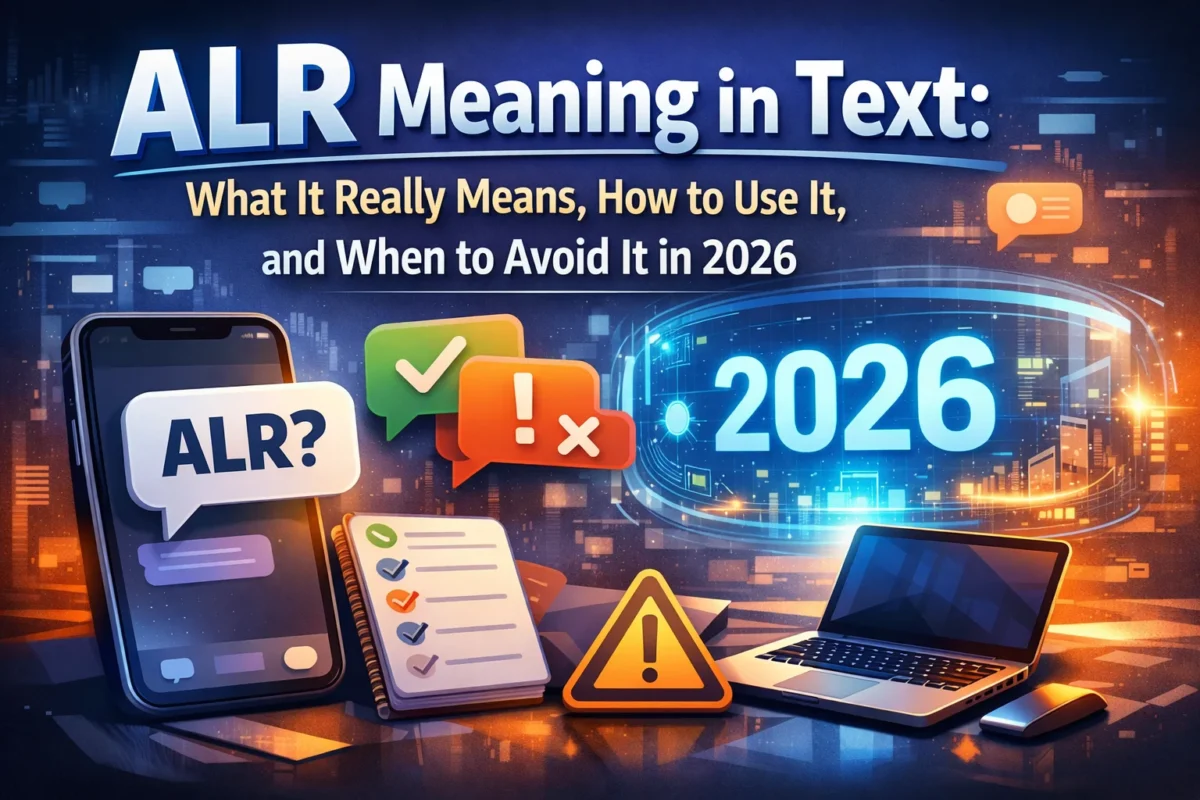
If you’ve ever received a quick “ALR” in a message, you probably paused for a second. Is it friendly? Is it dry? Or is the other person annoyed?
Here’s the truth. ALR meaning in text looks simple on the surface. Yet once you dig deeper, it reveals something more interesting—tone, context, and intent all wrapped into just three letters.
Let’s break it down in a way that actually makes sense. No fluff. Just real usage, real examples, and practical insight you can use right away.
What Does ALR Mean in Text?
At its core, ALR means “alright.”
That’s it. Simple.
However, the way people use ALR in text changes everything. It can sound friendly, neutral, or even slightly cold depending on the situation.
Quick Definition Table
| Term | Full Form | Meaning | Tone |
| ALR | Alright | Okay / Fine / Got it | Context-dependent |
People shorten “alright” to ALR because texting favors speed. The fewer taps, the better. Over time, it became a standard shortcut in casual conversations.
Why People Use ALR Instead of “Alright”
You might wonder—why not just type the full word?
Good question.
Here’s why ALR slang meaning caught on:
- Speed matters
Mobile typing rewards shorter words. ALR saves time. - Casual tone
It feels relaxed. Not too formal. Not too slang-heavy. - Fits modern texting culture
People prefer quick, low-effort replies. - Blends in with other abbreviations
Think “idk,” “brb,” or “ttyl.”
In short, ALR sits in the sweet spot between formal and slang.
How ALR Is Used in Real Conversations
This is where things get interesting. The meaning stays the same, but the tone shifts depending on context.
Casual Agreement
When someone uses ALR casually, it signals agreement without overthinking.
Example:
- “We’re meeting at 7.”
- “ALR, see you.”
It feels natural. Nothing forced.
Acknowledgment Without Excitement
Sometimes, ALR means “I hear you” but not much else.
Example:
- “Send me the details.”
- “ALR.”
Short. Neutral. Efficient.
Ending a Conversation
ALR often acts as a soft exit.
Example:
- “Talk later?”
- “ALR, bye.”
It closes the conversation without sounding abrupt.
Tone Can Change Everything
Here’s the tricky part.
The same “ALR” can feel completely different depending on context.
| Situation | Interpretation |
| Friendly chat | Positive and relaxed |
| Serious discussion | Slightly dismissive |
| Argument | Passive-aggressive |
| Quick reply | Neutral |
Key insight:
You don’t just read the word. You read the situation around it.
ALR vs Other Slang Terms
Not all short replies feel the same. Some sound warm. Others feel cold.
Let’s compare.
Comparison Table
| Term | Meaning | Tone | Risk Level |
| ALR | Alright | Neutral | Low |
| OK | Okay | Balanced | Very Low |
| K | Okay | Cold | High |
| Bet | Agreement | Confident | Medium |
| Aight | Alright | Informal | Low |
What Makes ALR Different?
- It’s less cold than “K”
- It’s less formal than “OK”
- It’s less slang-heavy than “aight”
That balance makes ALR meaning in chat versatile.
Where You’ll See ALR Most Often in 2026
Language evolves fast. Still, some patterns stay consistent.
Text Messages
This is where ALR lives.
- Quick replies
- Everyday plans
- Casual conversations
Social Media Platforms
ALR appears frequently in:
- Instagram DMs
- Snapchat chats
- TikTok comments
People use it when they don’t want to overthink a response.
Gaming and Online Communities
Fast-paced environments demand quick communication.
- Multiplayer chats
- Discord servers
- Live interactions
In these spaces, short = efficient.
When You Should Use ALR
Used correctly, ALR works beautifully.
Best Situations
- Talking to friends
- Casual conversations
- Confirming plans
- Acknowledging messages
Why It Works
It sounds relaxed without sounding careless.
When NOT to Use ALR
This matters more than you think.
Professional Communication
Avoid ALR in:
- Emails
- Job messages
- Client conversations
Instead, use:
- “Alright”
- “Understood”
- “That works”
Authority Figures
Talking to:
- Teachers
- Managers
- Clients
Using ALR here can feel too casual.
Sensitive Conversations
This is critical.
If someone shares something serious, replying with “ALR” can feel dismissive.
Better responses:
- “I understand”
- “That makes sense”
- “I’m here for you”
Read More: HYD Meaning in Text (2026 Guide): What HYD Means in Chat, Snapchat, and Social Media
Real-Life Examples of ALR in Texting
Let’s make this practical.
Friendly Chat
- “Want to grab food?”
- “ALR, I’m down.”
Tone: Positive
Neutral Reply
- “Send me the file.”
- “ALR.”
Tone: Flat but acceptable
Slightly Annoyed
- “You forgot again.”
- “ALR, my bad.”
Tone: Defensive
Dry Response
- “Did you see it?”
- “ALR.”
Tone: Could feel cold
Is ALR Rude or Polite?
Short answer: It depends.
Tone Breakdown
| Context | Perception |
| Friendly | Polite |
| Neutral | Acceptable |
| Emotional conversation | Rude |
| Argument | Passive-aggressive |
Simple Rule
If tone matters, don’t risk it.
Why ALR Became Popular
This didn’t happen randomly.
Key Reasons
- Rise of mobile communication
- Short attention spans
- Preference for quick replies
- Influence of Gen Z language trends
Interesting Fact
Texting language has shifted toward efficiency over formality. ALR fits perfectly into that trend.
Common Mistakes People Make with ALR
Even simple words can go wrong.
Top Mistakes
- Using ALR in formal settings
- Overusing it in every reply
- Misreading tone
- Assuming it always means agreement
Quick Fix
Think about context first, then reply.
ALR in Different Age Groups
Language isn’t universal across generations.
Usage Breakdown
| Age Group | Usage Level |
| Gen Z | Very High |
| Millennials | Moderate |
| Gen X | Low |
| Boomers | Rare |
Insight
Younger users understand the nuance better. Older users may misinterpret it.
Alternatives to ALR (Better Choices)
Sometimes, a better word exists.
Alternative Options
- Alright
- Okay
- Sounds good
- Got it
- Sure
When to Use Each
| Situation | Best Option |
| Formal | Okay / Understood |
| Friendly | Sounds good |
| Quick reply | Got it |
| Confident agreement | Sure |
Case Study: How One Word Changed the Tone
Let’s look at a simple scenario.
Scenario
Message: “I need you to finish this today.”
Response 1
- “ALR.”
Feels neutral. Slightly cold.
Response 2
- “Alright, I’ll handle it.”
Feels responsible and professional.
Takeaway
Small wording changes create big perception shifts.
Expert Insight on Short Text Responses
“Short replies save time but often lose emotional clarity.”
This explains why ALR sometimes feels unclear. It lacks tone indicators like voice or facial expression.
FAQs
Does ALR always mean “alright”?
Yes. In texting, it consistently stands for “alright.”
Is ALR slang or abbreviation?
It’s an abbreviation used in informal communication.
Can ALR be used in emails?
No. It’s too casual for professional writing.
Is ALR the same as “aight”?
Not exactly. “Aight” sounds more slang-heavy and conversational.
Why do people reply with just “ALR”?
Because it’s quick. It acknowledges a message without adding extra detail.

At FunnyPuns.com, Emma Johnson brings you the funniest puns, witty jokes, and a daily dose of laughter.



Leave a Comment