

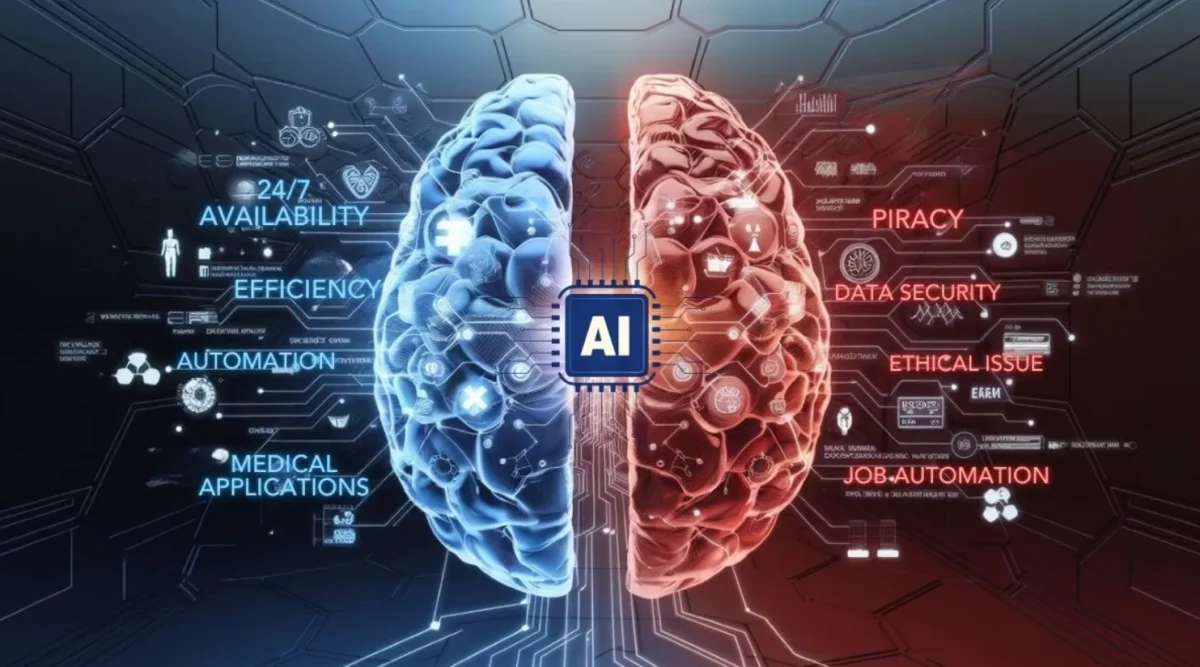
Artificial Intelligence (AI) is transforming the way we live, work, and interact with technology. From voice assistants and recommendation systems to self-driving cars and medical diagnostics, AI is becoming an essential part of modern life. Businesses, governments, and individuals are increasingly relying on AI-powered tools to improve efficiency, decision-making, and overall productivity.
However, while AI offers significant advantages, it also comes with potential risks that cannot be ignored. Concerns about job displacement, data privacy, ethical issues, and security threats have sparked global debates about how AI should be developed and regulated. Understanding both the benefits and risks of artificial intelligence is crucial for making informed decisions in a rapidly evolving digital world.
In this article, we will explore the key advantages and disadvantages of AI, helping you gain a balanced perspective on this powerful technology.
What is Artificial Intelligence?
Artificial Intelligence refers to the simulation of human intelligence in machines that are programmed to think, learn, and make decisions. These systems use algorithms, data, and computational power to perform tasks that typically require human intelligence, such as problem-solving, speech recognition, and pattern analysis.
AI can be categorized into three main types:
- Narrow AI: Designed for specific tasks (e.g., chatbots, recommendation systems)
- General AI: Capable of performing any intellectual task like a human (still theoretical)
- Superintelligent AI: Surpasses human intelligence (hypothetical and future concept)
As AI continues to evolve, its impact on industries and daily life becomes more significant.
Benefits of Artificial Intelligence
1. Increased Efficiency and Productivity
One of the biggest advantages of AI is its ability to automate repetitive tasks. Businesses use AI to handle data entry, customer support, and workflow management, allowing employees to focus on more strategic activities.
AI systems can operate 24/7 without fatigue, leading to faster output and reduced operational costs. This is especially beneficial in industries like manufacturing, finance, and logistics.
2. Improved Decision-Making
AI analyzes large volumes of data quickly and accurately. By identifying patterns and trends, it helps organizations make data-driven decisions.
For example, AI-powered analytics tools can predict market trends, customer behavior, and potential risks. This leads to better planning and improved business outcomes.
3. Enhanced Healthcare Services
AI is revolutionizing the healthcare industry by improving diagnosis, treatment, and patient care. Machine learning algorithms can detect diseases at an early stage, sometimes even before symptoms appear.
AI-powered tools assist doctors in interpreting medical images, managing patient records, and developing personalized treatment plans. This results in faster and more accurate healthcare services.
4. Better Customer Experience
Many companies use AI to enhance customer service through chatbots and virtual assistants. These tools provide instant responses, personalized recommendations, and 24/7 support.
AI also helps businesses understand customer preferences, enabling them to deliver more relevant products and services. This improves customer satisfaction and loyalty. In the financial sector, AI in banking has become particularly transformative, with institutions leveraging intelligent systems to streamline operations while delivering personalized financial guidance to customers.
5. Innovation and Technological Advancement
AI drives innovation across multiple industries. From autonomous vehicles to smart homes, AI is enabling new technologies that were once considered science fiction.
It accelerates research and development by analyzing complex data and generating insights. This leads to faster breakthroughs in science, engineering, and technology.
6. Improved Safety and Risk Management
AI systems can be used to monitor environments and detect potential hazards. In industries like construction, mining, and transportation, AI helps reduce accidents and improve safety standards.
For example, AI-powered surveillance systems can identify suspicious activities and prevent security threats in real time.
Risks of Artificial Intelligence
1. Job Displacement
One of the most significant concerns about AI is its impact on employment. Automation can replace jobs that involve repetitive or routine tasks.
While AI creates new job opportunities in tech and data-related fields, many workers may struggle to adapt to changing job requirements. This could lead to economic inequality if not managed properly.
2. Data Privacy Concerns
AI systems rely heavily on data to function effectively. This raises concerns about how personal data is collected, stored, and used.
Improper handling of data can lead to privacy breaches and misuse of sensitive information. Companies must ensure strong data protection measures to maintain user trust.
3. Bias and Ethical Issues
AI systems can sometimes produce biased results due to flawed data or algorithms. If the training data contains biases, the AI system may reinforce discrimination in areas like hiring, lending, or law enforcement.
Ethical concerns also arise regarding decision-making by machines, especially in critical situations such as healthcare or criminal justice.
4. Security Threats
AI can be used for malicious purposes, including cyberattacks, fraud, and misinformation. Hackers can exploit AI systems to create more sophisticated attacks.
Deepfake technology, for example, can manipulate videos and audio to spread false information. This poses a serious threat to security and public trust.
5. Lack of Transparency
Many AI systems operate as “black boxes,” meaning their decision-making processes are not easily understood by humans. This lack of transparency can make it difficult to trust AI outcomes.
In critical sectors like healthcare and finance, understanding how decisions are made is essential for accountability and reliability.
6. Dependence on Technology
As society becomes more reliant on AI, there is a risk of over-dependence on technology. This could reduce human skills, creativity, and critical thinking abilities over time.
Excessive reliance on AI systems may also create vulnerabilities if those systems fail or are compromised.
Balancing the Benefits and Risks
To maximize the advantages of AI while minimizing its risks, it is essential to adopt responsible practices. Governments, organizations, and developers must work together to create ethical guidelines and regulations.
Key strategies include:
- Implementing strict data privacy laws
- Ensuring transparency in AI systems
- Promoting fairness and reducing bias
- Investing in education and skill development
- Encouraging human oversight in critical decisions
By taking these steps, society can harness the power of AI while addressing its challenges effectively.
Future of Artificial Intelligence
The future of AI is both exciting and uncertain. As technology continues to advance, AI will become more integrated into everyday life.
We can expect innovations in areas such as:
- Smart cities and infrastructure
- Advanced healthcare solutions
- Autonomous transportation
- Personalized education systems
However, the success of AI will depend on how well we manage its risks. Responsible development and ethical considerations will play a crucial role in shaping the future of artificial intelligence.
Conclusion
Artificial Intelligence is a powerful tool that offers numerous benefits, from increased efficiency and better decision-making to improved healthcare and innovation. At the same time, it presents significant risks, including job displacement, privacy concerns, and ethical challenges.
Understanding both sides of AI is essential for individuals and organizations looking to adapt to the digital age. By embracing AI responsibly and addressing its potential drawbacks, we can create a future where technology enhances human life without compromising safety or ethics.
Also Read: Luxury Real Estate Market Trends

Pun enthusiast, wordplay wizard, and the mastermind behind Funnnypuns.com. David turns everyday language into laugh-out-loud moments—one pun at a time!




Leave a Comment