

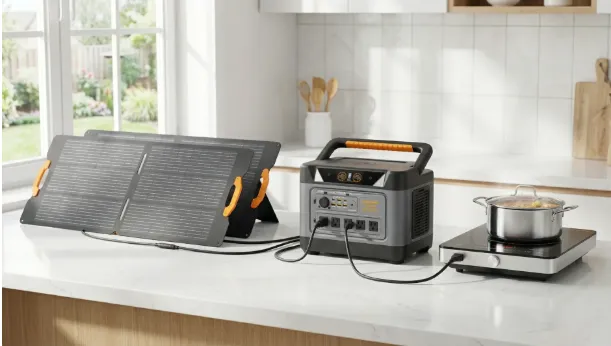
Many households now look at portable power stations as backup power for the kitchen. People want to know if these battery-powered units can actually run real appliances, not just phones and laptops. The answer depends on the power station’s output, battery capacity, and the wattage of each appliance. Modern units, like the EcoFlow DELTA 3 Plus Portable Power Station with 1800W AC output and up to 2400W (3600W surge) using X-Boost technology, can handle much more than light gadgets. This guide explains which kitchen appliances you can safely power, how long they might run, and what specs truly matter.
Which Kitchen Appliances Can a Portable Power Station Run?
Running Small Kitchen Appliances Like Coffee Makers and Blenders
Small kitchen appliances usually make the easiest match for a portable power station. Many drip coffee makers, stick blenders, personal blenders, and small food processors draw between 300W and 900W while running. A unit like the EcoFlow DELTA 3 Plus, with 1800W AC output and up to 2400W using X-Boost, can power one or two of these appliances at a time, as long as you stay below its rated output. Check the label on your coffee maker or blender for watts, then compare it to the power station’s continuous output. Short, high‑draw tasks, such as blending smoothies, use less total energy than long brewing cycles.
Can Portable Power Stations Power Refrigerators and Freezers?
Many portable power stations can run modern energy‑efficient refrigerators and freezers, but you must check both running watts and startup surge. A typical household fridge might list 100W–200W running power, yet the compressor can require several times that for a second or two. The EcoFlow DELTA 3 Plus offers 1800W continuous AC output and up to 3600W surge with X-Boost, which can cover that brief spike. Once running, the fridge cycles on and off, so average energy use stays modest. Larger side‑by‑side units or older models draw more power, so compare their wattage labels and consider runtime needs during longer outages.
Using Microwaves, Air Fryers, and Electric Kettles Safely
High‑heat appliances demand more from a portable power station. Many compact microwaves draw 700W–1200W, while full‑size models can exceed 1500W. Air fryers and electric kettles often pull 1200W–1800W. A station like the EcoFlow DELTA 3 Plus, with 1800W output and up to 2400W (3600W surge) using X-Boost, can run many of these, but usually one at a time. Always compare appliance wattage to the continuous rating first. Keep cooking times short to protect battery life. Avoid plugging multiple high‑draw devices into the same power station outlet group. Use heavy‑duty cords only when needed, and never cover vents or block airflow during operation.
What Determines Whether a Portable Power Station Can Handle Kitchen Appliances?
Battery Capacity, Output Power, and Runtime Explained
Three specs decide if a portable power station can realistically support your kitchen: battery capacity, output power, and runtime. Capacity, measured in watt‑hours (Wh), shows how much energy the battery stores. Output power, in watts, tells you how much load it can handle at once. For example, if a station runs a 1000W coffee maker, it must supply that wattage continuously. Runtime equals battery capacity divided by the appliance’s draw, adjusted for efficiency losses. A 1000Wh station powering a 500W appliance might run for roughly 1.5–1.7 hours. Higher output power, like the EcoFlow DELTA 3 Plus’s 1800W AC, allows more demanding appliances.
Why Appliance Startup Power Matters for Kitchen Devices
Many kitchen appliances need extra power at startup, even if their running watts seem low. Motors in fridges, blenders, and food processors, plus compressors and some fans, create a surge when they first switch on. That spike can be two to three times the listed running wattage. If the portable power station cannot provide enough surge power, it may shut down or the appliance may fail to start. Models like the EcoFlow DELTA 3 Plus, which can reach 2400W (3600W surge) using X-Boost, help cover those brief spikes. Always check both continuous output and surge capability when planning your kitchen backup setup.
The Importance of Pure Sine Wave Inverters and Safety Protection
A quality portable power station should use a pure sine wave inverter, especially for kitchen appliances with motors, compressors, or electronic controls. Pure sine wave output closely matches home grid power, so refrigerators, microwaves, and coffee makers run more smoothly and reliably. Cheap modified sine wave units can cause noise, extra heat, or even damage sensitive electronics inside some appliances. Safety protections also matter: look for short‑circuit, over‑temperature, over‑voltage, and overload protection. Units like the EcoFlow DELTA series include multiple safety layers and smart battery management. These features reduce the risk of tripped circuits, overheating, or damage while powering demanding kitchen devices.
Conclusion
A portable power station can run many common kitchen appliances, but only when you match the right device to the right power specs. Small coffee makers, blenders, and compact microwaves often work well. Energy‑efficient refrigerators and freezers can run if the station offers enough surge power and battery capacity. Models like the EcoFlow DELTA 3 Plus, with 1800W AC output and 2400W (3600W surge) using X-Boost, open the door to more realistic backup cooking and cooling. Always review appliance wattage, startup demands, and expected runtime, then plan usage carefully so your battery backup stays safe, practical, and dependable.

Pun enthusiast, wordplay wizard, and the mastermind behind Funnnypuns.com. David turns everyday language into laugh-out-loud moments—one pun at a time!




Leave a Comment