

Have you ever sent a message, typed your thoughts, hit send, and then remembered something important? That’s where PS comes in. You’ve probably seen it in emails, texts, or even social media posts. But do you really know what it means, where it came from, or how to use it effectively in 2026?
In this article, we’ll explore the PS meaning in text, its origins, modern usage, common mistakes, and even some creative ways to use it. By the end, you’ll feel confident dropping a PS anywhere without sounding awkward or old-fashioned.
What Does PS Mean?
PS is short for postscript, derived from the Latin phrase post scriptum, meaning “written after.” It’s used when you want to add an afterthought or extra information that wasn’t included in the main message.
Think of PS as a way to say: “Oh, one more thing…” without rewriting your entire message. It’s concise, effective, and adds a personal touch.
Variations to Know:
- PS – Common in texts and casual emails
- P.S. – Traditional, with periods, often used in formal letters
- PS: – Modern style, colon included, especially in digital communication
Example:
“I can’t wait to see you this weekend. PS: Don’t forget to bring your favorite snacks!”
Notice how natural it reads, like you’re talking directly to someone.
Origin and History of PS
The postscript has been around long before emails and text messages. It originated in letter writing, where writers would add a note after signing off.
Interesting Facts About PS History:
- Medieval letters sometimes included postscripts to clarify points.
- Napoleon Bonaparte was known for using PS in his correspondence, adding quick notes or reminders after his letters were written.
- PS was crucial when rewriting a full letter was too cumbersome. Instead, the writer could simply append an extra thought.
Over time, PS transitioned from formal letters to casual notes, and now thrives in digital communication. It’s fascinating how a centuries-old habit persists in texting culture.
How to Use PS in Text and Online Communication
Using PS correctly can make your messages clearer, more personal, or even humorous. But there’s a difference between casual texting and professional emails.
When to Use PS:
- Extra information that didn’t fit in the main message
- Friendly reminders for someone you’re texting
- Humor or personality to make your message memorable
Examples Across Platforms:
Text Message:
“I’ll be at the coffee shop at 3. PS: Try the new pumpkin muffin!”
Professional Email:
“Thank you for reviewing the report. PS: I’ve attached the updated version for your convenience.”
Social Media Caption:
“Had an amazing weekend at the beach! PS: Swipe to see all the photos 🏖️”
Notice how the tone changes depending on the context. PS is versatile but works best when short, relevant, and engaging.
Popular Variations of PS
Over time, people started expanding PS for multiple thoughts. Here’s a quick guide:
| Variation | Meaning | When to Use |
| PS | Postscript | Single afterthought |
| PPS | Post-Postscript | Another note after PS |
| PPPS | Post-Post-Postscript | Rare, mostly humorous |
| PSA | Public Service Announcement | Different context—used for announcements, not afterthoughts |
Quick Tip: Using more than two postscripts can look cluttered. Stick to PS or PPS in most communications.
PS in Social Media and Texting Culture
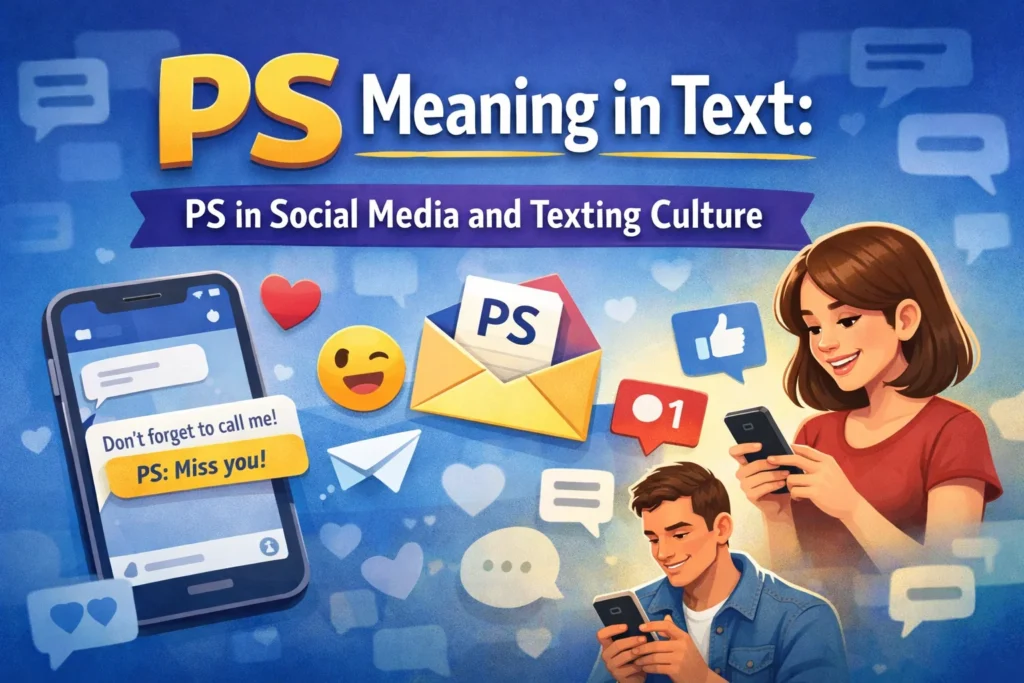
PS isn’t just for emails anymore. It’s everywhere online: Instagram, Twitter, TikTok, and even LinkedIn. Its usage has shifted slightly in the digital age.
Why PS Works Online:
- Captures attention at the end of posts
- Adds personality or humor to captions
- Makes content more relatable
Example:
Instagram Caption: “Finally finished my DIY project! PS: It took way longer than expected 😅”
Social media PS often has a casual, conversational tone—perfect for engaging your audience.
Read More: OBJ Meaning in Text – What It Means in Chats & Social Media
Common Mistakes and Misunderstandings
Even seasoned texters misuse PS. Here are pitfalls to avoid:
- Overusing PS in professional emails – it can seem informal or sloppy
- Placing PS in the wrong spot – always after the main content and signature (if applicable)
- Using PS redundantly – don’t repeat information that’s already in your message
Case Study: Email Misuse
A marketing team sent an email:
“Please check the attached files. PS: The files are attached.”
Redundant PS confused recipients. A better version:
“Please check the attached files. PS: Don’t forget to review section three!”
Fun and Creative Ways to Use PS
PS doesn’t have to be mundane. It can spark engagement, humor, or curiosity.
Creative Ideas:
- Add funny afterthoughts:
“Can’t wait for our meeting. PS: I’ll bring the donuts 🍩”
- Use in marketing emails for conversions:
“Our sale ends tomorrow. PS: Extra 10% off with code PS10!”
- Add emojis or playful language to make a PS feel personal
PS can also serve as a signature style. Many influencers and brands use PS as a clever brand voice tool.
Quick Tips for Using PS Like a Pro
- Keep it short and relevant
- Don’t repeat what’s already stated
- Adjust tone for audience and platform
- Use proper punctuation to maintain clarity
- Limit to one or two postscripts per message
Pro Example:
“Looking forward to our lunch. PS: Let me know if you want to try that new sushi place 🍣”
Notice the friendly, concise, and engaging tone—it’s a small addition that leaves a big impression.
PS Examples Table
Here’s a handy table with examples across platforms:
| Platform | Example | Meaning / Usage |
| Text | “See you soon. PS: Bring your camera!” | Casual add-on |
| “Thanks for your help. PS: The report is attached.” | Professional reminder | |
| “Had the best weekend! PS: Swipe for photos” | Social media hook | |
| Marketing Email | “Don’t miss our sale. PS: Extra 10% off with code PS10” | Conversion/engagement |
| “Great connecting today. PS: Here’s a link to the resource we discussed” | Professional networking |
This table can serve as a quick reference for using PS appropriately in any context.
Conclusion
Understanding PS meaning in text goes beyond just letters. It’s a communication tool that adds personality, humor, and important afterthoughts. From its historical roots in letter writing to modern use in texts, emails, and social media, PS remains versatile and timeless.
Remember:
- Use PS to add value, not clutter
- Keep it short, relevant, and engaging
- Tailor the tone for your audience and platform
Next time you write a message, email, or social post, don’t just hit send. Add a PS—and watch how a simple afterthought can make your communication more memorable and personal.

At FunnyPuns.com, Emma Johnson brings you the funniest puns, witty jokes, and a daily dose of laughter.


![120+ Best [Bear Puns ] [2026 Trending Edition]](https://funnnypuns.com/wp-content/uploads/2026/03/best-bear-puns-768x432.webp)
![120+ Best [Bear Puns ] [2026 Trending Edition]](https://funnnypuns.com/wp-content/uploads/2026/03/best-bear-puns-320x180.webp)
Leave a Comment