

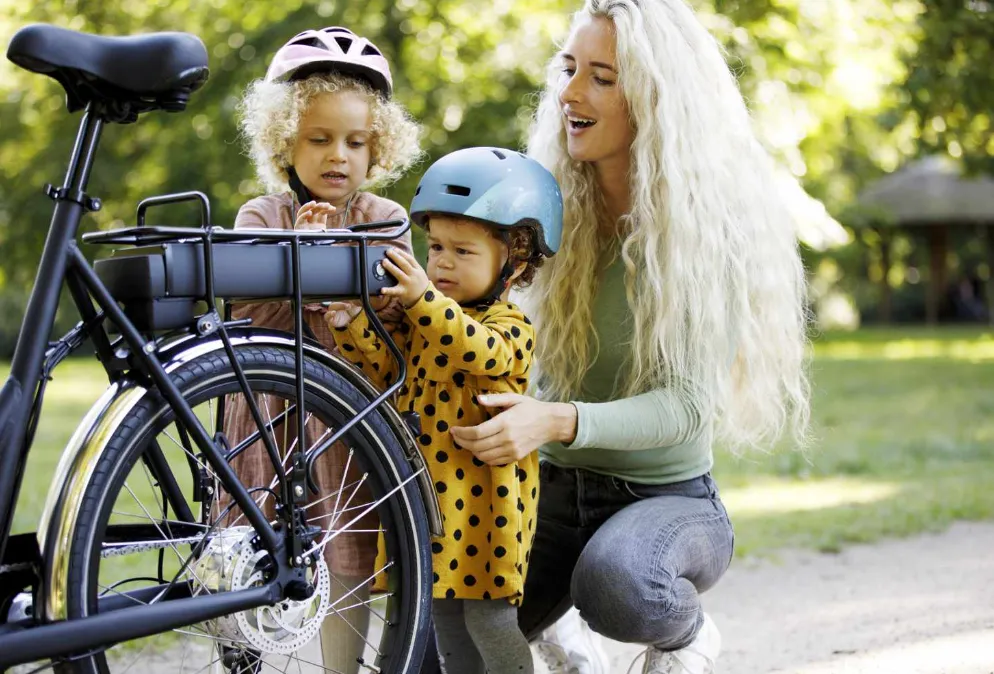
Electric bikes have moved well beyond novelty status. They now fill bike lanes, coastal paths, and neighborhood streets across Southern California, and the rapid growth in ridership has brought a parallel rise in accidents and serious injuries. Understanding the rules that govern these vehicles is no longer optional.
What Makes a Bike an E-Bike?
California law defines an electric bicycle as a bike equipped with fully operable pedals and an electric motor of 750 watts or less. Unlike motorcycles, a true e-bike must be pedal-assist, meaning the motor supplements human effort rather than replacing it entirely.
Standard e-bikes do not require registration, licensing, or insurance. However, every e-bike must carry a permanently affixed label in 9-point Arial font identifying its classification, top assisted speed, and motor wattage.
The Three E-Bike Classes
California recognizes three distinct e-bike classes, each with its own rules around speed, minimum age, and where riders may legally operate them.
Class 1 and Class 2
Class 1 e-bikes provide pedal assistance up to 20 mph. Class 2 e-bikes use a throttle to assist up to the same 20 mph threshold. Both classes carry no minimum age requirement and do not mandate helmets for riders 18 and older.
These bikes are permitted on street lanes, bike paths, designated bike routes, and separated cycle tracks.
Class 3
Class 3 e-bikes provide pedal assistance up to 28 mph, making e-bike safety a more pressing concern at these speeds. Riders must be at least 16 years old, and helmets are required for all ages.
Class 3 bikes are permitted on street lanes and marked bike lanes, but are prohibited on off-road Class I bike paths shared with pedestrians.
Where Can You Legally Ride?
Bikeway access depends on e-bike class and location. Here is a general breakdown:
Off-road paths shared with pedestrians are limited to Class 1 and 2 only. On-road protected lanes, shared roadways marked by signage, and protected cycle tracks separated from traffic are open to all three classes.
E-bikes of any class are prohibited on unpaved trails in regional and wilderness parks, and sidewalk riding is generally not permitted. When on the road, riders must follow the flow of traffic and stay as far right as is practical.
New State Laws in Effect for 2026
Legislators have moved quickly to address growing e-bike safety concerns. Four significant laws took effect on January 1, 2026.
Speed modification devices are now banned from sale. Selling any product that alters an e-bike’s speed limiter is now an infraction under California law.
Age-based sales restrictions are also now in force. Retailers and private sellers cannot legally sell a Class 3 e-bike to anyone under 16, with violations carrying fines up to $250.
Red reflectors, once required only at night, must now be visible at all times. This change is intended to improve rider visibility throughout the day.
Finally, riders under 18 who receive a helmet citation can now have that ticket dismissed by completing an approved e-bike safety course and showing proof of a compliant helmet.
Helmet and Night Riding Requirements
Helmet Laws by Class
For Class 1 and 2 e-bikes, helmets are legally required for all riders under 17. Adult riders are strongly encouraged to wear one, though it is not currently mandated by law.
For Class 3 e-bikes, helmet use is required for every rider and passenger regardless of age. Helmets meeting ASTM or CPSC safety standards offer meaningful protection against traumatic brain injuries.
Riding After Dark
Nighttime riders must use reflective gear and lighting. The 2026 law requiring red reflectors at all times reinforces this requirement. Using a front light and wearing reflective clothing adds another layer of protection on dimly lit routes.
DUI Laws Apply to E-Bike Riders
California DUI laws extend to e-bike riders. Because e-bikes are classified as motorized vehicles, operating one with a blood alcohol concentration of 0.08% or higher can result in a standard DUI charge.
The Zero Tolerance law prohibits anyone under 21 from riding an e-bike with a BAC of 0.02% or higher. This is a frequently overlooked aspect of e-bike safety that riders and parents should understand clearly.
Parental Liability Under the 2026 Law
California significantly expanded parental liability related to e-bike violations this year. Parents can now face child endangerment charges, fines, and e-bike impoundment if their children break applicable laws.
In more serious cases involving illegal e-motorcycles, parents may face criminal charges. This expanded liability underscores why e-bike safety education within the home is just as important as enforcement on public roads.
Essential Safety Tips Before and During Every Ride
Good habits dramatically reduce the risk of an accident. Before riding, always perform a pre-ride inspection covering the wheels, brakes, handlebars, and motor. Only purchase e-bikes from reputable manufacturers that include standard safety features such as motor-interrupt brake levers, reflectors, and a class label.
While riding, always wear an approved helmet and ride at a safe speed. E-bikes travel faster than traditional bicycles, and hazards like potholes, parked cars, and pedestrians can appear quickly. Always yield the right-of-way to pedestrians.
How an Experienced Attorney Can Help
When an e-bike accident results in serious injury, the legal picture can quickly become complicated. California’s comparative negligence laws mean that liability can be shared among multiple parties, including drivers, government entities, and even the injured rider.
An experienced bicycle accident attorney can investigate the accident, identify all responsible parties, and pursue full compensation for medical expenses, lost income, and long-term damages. If a manufacturer sold a defective or illegally modified e-bike, working with a personal injury law firm can explore product liability claims as well.
For parents whose children were injured due to another party’s negligence, or who are navigating potential liability for their own child’s actions, legal guidance is essential. An attorney familiar with California’s evolving e-bike laws can protect your rights and help you understand your options from the start.

Pun enthusiast, wordplay wizard, and the mastermind behind Funnnypuns.com. David turns everyday language into laugh-out-loud moments—one pun at a time!
![150+ Best Receding Hairline Jokes [2025 Trending Edition]](https://funnnypuns.com/wp-content/uploads/2025/09/best-receding-hairline-jokes-440x248.webp)
![150+ Best Receding Hairline Jokes [2025 Trending Edition]](https://funnnypuns.com/wp-content/uploads/2025/09/best-receding-hairline-jokes-320x180.webp)




Leave a Comment